



How Do Intelligent Laminators Improve Module Reliability?
JAN. 3, 2026
Ensuring long-term reliability has become a key priority for modern PV module manufacturers. As module designs move toward larger formats, high-density interconnection, TOPCon, HJT and emerging perovskite technologies, the lamination stage now carries a heavier technical burden than ever. In this context, intelligent laminators have become essential tools for stabilizing quality, reducing defects and protecting power output throughout the full lifecycle of the module.
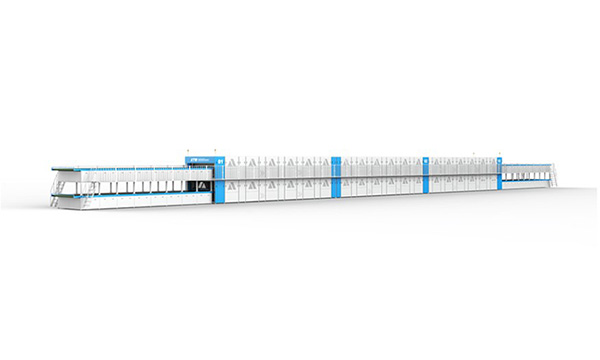
Precise Temperature Control Ensures Stable Encapsulation
A core advantage of intelligent laminators is their precise temperature control. Traditional systems often struggle with uneven heating, which can lead to bubbles, insufficient encapsulation or unstable adhesive flow. Intelligent laminators use real-time current monitoring and dense temperature sensing arrays to ensure uniform heating across every area of the module. This improves EVA or POE cross-linking, reduces delamination risks and significantly enhances long-term durability—an increasingly important factor as modules grow in size and complexity.Adaptive Pressure Systems Improve Mechanical Reliability
Pressure control is another area where intelligent laminators make a difference. Different module structures—including glass-glass, ultra-large modules, HJT cells or curved BIPV elements—respond differently to compression. Intelligent laminators automatically adapt pressure profiles to match the module type, helping prevent micro-cracks and improving mechanical strength. Advanced configurations such as flat pressing, pin-type support or inflation pressure further stabilize delicate surfaces and ensure cleaner, tighter encapsulation.Broad Compatibility Supports Next-Generation Module Technologies
Intelligent laminators also support a wide range of next-generation module technologies. Whether manufacturers are producing BIPV modules, experimenting with thin-film or perovskite layers, or transitioning to oversized formats, modern laminators are designed with a high degree of compatibility. This flexibility not only reduces reinvestment pressure but also allows factories to scale or upgrade their production lines with fewer equipment constraints.________________________________________
Why Intelligent Laminators Matter for Module Reliability
To highlight the impact more clearly, reliability improvements can be understood through a few key aspects:- Better encapsulation quality: Uniform temperature and adaptive pressure ensure stronger bonding and fewer defects inside the laminate.
- Enhanced moisture and UV resistance: Consistent cross-linking improves the module’s protection against environmental stress.
- Lower risk of delamination: Stable thermal and pressure profiles reduce internal stresses that cause separation over time.
- Stronger mechanical durability: Intelligent pressure systems help protect fragile cells, especially in large-format or high-density designs.
________________________________________
About ATW
ATW is a global supplier of intelligent PV manufacturing equipment, with a strong focus on advanced lamination solutions for high-efficiency module production. The KM252AA laminator series integrates real-time temperature uniformity monitoring, multi-stage adaptive pressure control, and broad compatibility with BIPV, thin-film, HJT, and curved-glass modules—helping manufacturers maintain stable quality as technologies continue to evolve.With deep process expertise and a mature intelligent manufacturing platform, ATW works closely with PV manufacturers to improve yield, reliability, and production flexibility. If you are looking to upgrade your lamination process or prepare your production line for next-generation modules, ATW’s team is ready to support you.
Contact ATW to explore how intelligent lamination can strengthen your module reliability and long-term competitiveness.